
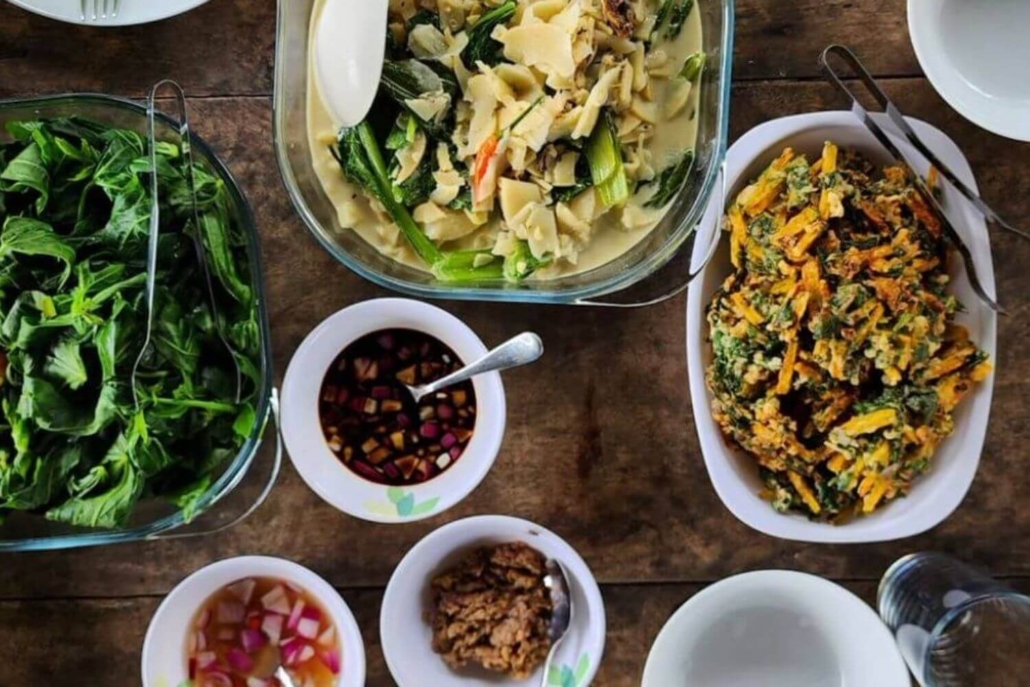
Most people can’t tell you exactly when a tomato was picked before it landed in their cart. That gap, the one between harvest and plate, is what farm to table is actually about. It’s grown well beyond restaurant menus into something people now actively seek out as an experience, not just a meal.
At its core, farm to table is about shortening the distance between where food grows and where it’s eaten, both literally and in terms of trust. At Habilin Farms in Tayabas, Quezon, that distance is often just a few hundred meters and a couple of hours, the time it takes to walk through the garden, harvest what’s ready, and bring it to the table.
What Farm to Table Actually Means
The term gets used loosely these days, sometimes stretched to describe restaurants that simply source from local suppliers rather than large distributors. The original idea is more specific than that. True farm to table means produce travels directly from where it was grown to where it’s served, with little to no time spent in storage, transport, or processing in between.
This matters because food changes the moment it’s harvested. Vegetables begin losing nutrients and flavor as soon as they’re picked, and the longer they sit in transit or on a shelf, the more of that quality fades. A tomato picked that morning and a tomato that traveled for days before reaching a grocery aisle are technically the same vegetable, but they rarely taste like it.
Why the Movement Keeps Growing
Farm to table isn’t a new concept, but its popularity has accelerated for reasons that go beyond taste alone.
People want to know where their food comes from. As supply chains have grown longer and more industrial, more people are asking basic questions that used to have obvious answers. Who grew this? How was it grown? Farm to table experiences answer those questions directly, often by letting guests do the harvesting themselves.
Health and food safety concerns are real. Produce grown without synthetic pesticides or chemical fertilizers carries fewer of the residues associated with conventional farming. For visitors managing health concerns or simply trying to eat cleaner, knowing exactly how their food was grown carries weight that a label alone can’t provide.
Sustainability has become a priority, not an afterthought. Long supply chains carry a heavier environmental cost, from transportation emissions to the packaging needed to keep produce shelf-stable. Sourcing food locally, or growing it on-site, sidesteps most of that footprint entirely.
The experience itself has value. Eating a meal someone else prepared from ingredients you don’t recognize is different from eating one where you watched, or even helped, the ingredients get picked. That sense of participation is part of why farm-to-table getaways have grown alongside the broader wellness travel trend.
How Habilin Farms Practices Farm to Table
At Habilin Farms, farm to table isn’t a marketing description. It’s built into how the farm operates day to day. The farm follows permaculture principles, an approach to agriculture built around three core ethics: Earth Care, People Care, and Fair Share. In practice, this means no tilling, no synthetic fertilizers, and no chemical pesticides, with the soil’s health treated as the foundation everything else depends on.
This approach shapes the food itself. Produce grown without artificial inputs tends to be more flavorful, since the plant isn’t relying on synthetic shortcuts to grow quickly. Meals at the farm don’t follow a fixed menu. What’s served depends on what’s ready to harvest that day, supplemented by indigenous edibles that grow wild across the property. It’s a structure that keeps every meal tied directly to the season and the land, rather than to a printed list of dishes.
Guests aren’t kept separate from this process either. Visitors are welcome to pick vegetables and fruits themselves, learn how seeds are sown, and see firsthand how a permaculture garden is laid out to work with the local ecosystem rather than against it. For many guests, this is the first time they’ve harvested anything they later ate, and it tends to change how they think about food long after the visit ends.
A Farm Rooted in Local Impact
Habilin Farms was founded by Ben Francia, known locally as Bambu, who transformed what was once an underused coconut plantation into an accredited learning site for agriculture after completing formal training in organic farming. That same commitment to community extends beyond the farm’s own kitchen. Through its connection with the Organic Farmers’ Association, Habilin Farms supports small-scale local farmers, and its Farm-to-Tray initiative partners with local hospitals to provide chemical-free vegetables to patients, extending the farm-to-table principle into public health.
This wider context matters for visitors who care about where their food and their travel spending actually go. A meal at Habilin Farms isn’t just farm to table in the literal sense. It’s connected to a broader effort to support organic farming and food security across the local community in Tayabas.
What Visitors Can Expect
A farm-to-table visit at Habilin Farms typically starts in the garden, not the kitchen. Guests are guided through the farm’s vegetable beds and food forest, where they can pick what looks ready, ask questions about how it was grown, and get a sense of the permaculture design behind it all. From there, meals are prepared using whatever was harvested, often paired with native ingredients that don’t show up in a typical grocery run.
It’s a slower way to eat, and that’s largely the point. There’s no rushing a meal that started with picking the ingredients yourself, and there’s no need to wonder where any of it came from. For visitors used to packaged, well-traveled food, this kind of direct connection between farm and plate tends to be the part of the trip they remember most.
Tasting the Difference for Yourself
Farm to table is easy to read about, harder to fully understand until you’ve experienced it. The flavor difference is real, but so is the shift in perspective that comes from picking your own food and watching it become a meal within the same day. At Habilin Farms, that experience is built into the visit itself, not an add-on to it.
If you’re ready to taste what farm to table actually means, explore our Day Tour Packages or book a stay at Habilin Farms today. Come see where your next meal really comes from.
